The Scratched Diamond
Sri Harold Klemp sometimes uses folktales, fables, parables, and stories to illustrate spiritual principles. In the excerpt below from one of his talks, he retells “The Scratched Diamond” from The Hungry Clothes and Other Jewish Folktales, by Peninnah Schram.
A student was walking along with his master one day. This master was known for always answering questions with a parable. His student said, “Rabbi, I have so many imperfections. What can I do? How can I work with them so that I can be a better person?” The Rabbi said, “Listen, and I’ll tell you a story.
“There was once a king, and he had a beautiful diamond without a flaw—not a single flaw anywhere. You could turn it in the light, and it just sparkled. The facets all sparkled in an expected way, and when dignitaries came over, the king would show them his priceless diamond. He was so proud of it. Dignitaries would say, ‘We’re going to have to see His Majesty’s diamond again.’ ‘That’s OK, just make believe you enjoy it.’
“They would go in and say, ‘Oh, wow! Yep, sure is good. As pretty as can be. Just the same as last time.’
“But one day the king looked at it, and he noticed there was a scratch on it. Maybe he had been tossing it around with his other jewels, and he shouldn’t have done that. Anyway, it had a flaw now. But he had an ace up his sleeve.
“He called on the best diamond cutters in the kingdom. And he said, ‘All right, you guys. You’re the best there is. What can you do to restore this diamond?’
“Then one by one they took it, looked at it, and said, ‘Your Majesty, there isn’t a blessed thing we can do to restore this diamond to its original condition.’
“But standing by, looking on, was a young diamond cutter. He just finished his apprenticeship with the best diamond cutter in the kingdom, and he asked the king, ‘May I look at that?’ The king said, ‘Sure. Why not?’ The young man looked at it. He studied it very carefully, and he said, ‘If you will allow me to take it with me and to work uninterrupted, never asking for updates or anything, I’m going to try to make it a thing of worth and value.’
“Well, what’s a king to do? He had a lot of other jewelry. This diamond was worth as much as all the rest of his jewelry. When you’ve got a lot, you don’t care a lot. Unless you don’t have a lot anymore, like it’s all gone all of a sudden. But he wasn’t faced with that kind of problem.
“So this young craftsman went to work on it with all his love, because he loved his craft. Because it takes a great deal of skill and dexterity and vision. You’ve got to have vision to create something unusual and something from nothing.
“When he brought the diamond back to the king, the king looked at it, and he was amazed. He was delighted. And he said, ‘You did this to it?’ And what did he do to it?
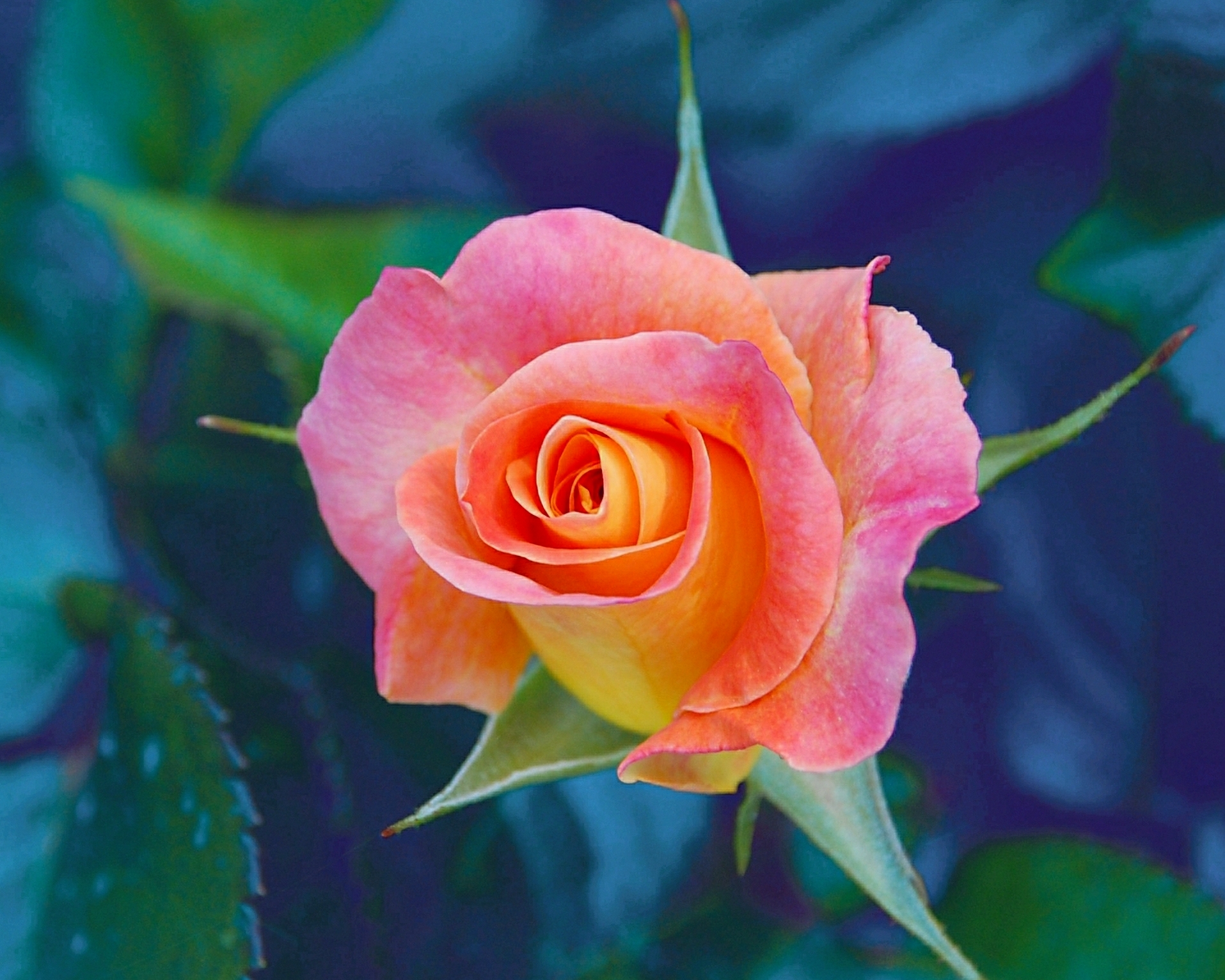
“Well, when the young man had looked at the diamond, he saw the scratch as the stem of a rose. Very carefully he etched roots onto the stem, and then leaves onto the stem, and then a flower onto the stem. From the scratch he had created a thing of beauty and value. In fact, it was more beautiful and more valuable to the king now than it had ever been.”
When the Rabbi finished the story, he looked at his student and said, “We all have our faults and failings. But, like the diamond with its scratch, it’s up to us to transform them into things of beauty and value.”
And so I say that to you too. It’s also a constant lesson to me. When we see the shreds and ends of our own lives [like the back side of an embroidered carpet], turn the carpet. Look on the other side. See what’s there. See the beauty that speaks to the handiwork of the creator.
—
Excerpted from The Master’s Talks in The Year of Light and Sound—2013–14.
Something to Think About
Think about what scratches you see on the diamond of your life. How might you turn them into roses?